

Halal Tallow Skincare in Australia, Why It Matters to Me
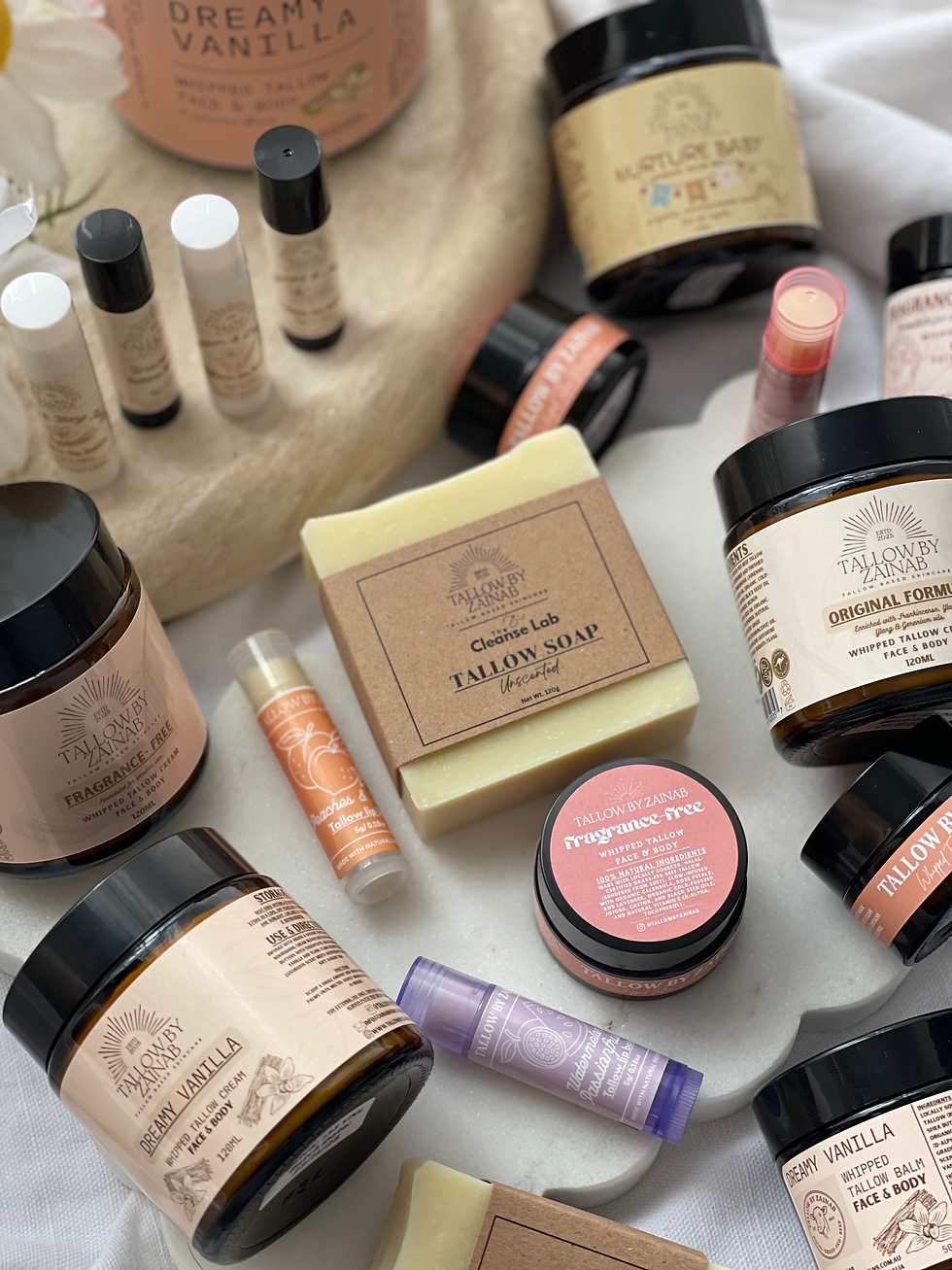
When I started creating my skincare range, I knew from the very beginning that every ingredient had to mean something. It wasn’t just about making a natural product. It was about building something with purpose, integrity, and heart.
That’s why I chose to use halal beef tallow, and I want to explain why that choice matters.
What Halal Truly Means
The word halal simply means “permissible.” But when you look deeper, it’s not just about what’s allowed, it’s about how things are done.
In Islam, when an animal is slaughtered in the halal way, it’s done with deep care and respect. The animal must be healthy and calm. The process must be quick, clean, and free from unnecessary pain. The blood is fully drained, because blood is seen as impure, and removing it creates something cleaner and purer in every sense, ethically and physically.
It’s not a harsh practice. It’s the opposite, it’s built on mercy, compassion, and gratitude.
Why I Chose Halal Tallow
Using halal beef tallow wasn’t just a religious decision. It was an ethical and human one.
To me, halal represents mindfulness, being conscious of where something comes from, how it’s treated, and how it’s handled. I wanted the base of my skincare to reflect that.
It’s about knowing that the tallow I use comes from animals that were treated with care and processed cleanly, in a way that aligns with both my faith and my conscience. It’s a small act of respect that carries a much bigger meaning.
Halal Isn’t Just for One Community
I know that for some people, the word halal might feel unfamiliar or even uncomfortable. But it shouldn’t. Halal doesn’t belong to one group, it’s a principle built on universal values: kindness, cleanliness, and accountability.
Whether or not you’re Muslim, those are things most of us believe in.
I wanted to create skincare that my own community could trust and feel represented by, but also something that anyone from any background, culture, or faith, could feel good about using. Because halal isn’t about exclusion. It’s about doing things properly.
Something for Everyone
When you use halal tallow skincare, you’re not just choosing something that aligns with a faith. You’re choosing something that’s ethically sourced, consciously made, and rooted in respect from beginning to end.
It’s skincare that’s as much about values as it is about results.
So whether you’re Muslim or not, I hope this helps you see halal for what it truly is,
a commitment to care. A reminder that what we put on our skin, and what we support, should come from a place of integrity.



What interests me about exploring cultural connections in Wlodawa is how a broad idea becomes part of an ordinary day. Different local traditions can show how a community's story has more than one thread. It makes me curious about the practical side of Wlodawa cultural heritage. A short discussion of an everyday example would make this easier for me to connect with, especially as someone still learning about the subject. How can students represent those threads without treating one perspective as the whole story?
I can see why supporting children in the third year of school would invite discussion, since different people will bring different experiences to the same question. An activity that combines reading and explanation can reveal several kinds of understanding at once. It makes me curious about the practical side of third grade learning activities. I would probably come back to this question after trying to work through one concrete example rather than deciding immediately. What helps a child become more comfortable explaining an answer in their own words?
A conversation about helping primary pupils settle into school routines seems most useful to me when it leaves space for uncertainty and further questions. A consistent routine can free children's attention for the activity itself. This is why I would approach Swiebodzice primary education with a specific question rather than a fixed expectation. The part I would like to explore further is what happens when the idea meets a real situation with its own limitations. Which parts of a school day benefit most from a clear and familiar sequence?
The subject of connecting school projects with Suchozebry feels more interesting when there is room for a reader to stop and ask their own questions. Working with local examples can make research feel less distant. It gives me a more concrete starting point for thinking about Suchozebry school learning. I would probably come back to this question after trying to work through one concrete example rather than deciding immediately. How could pupils turn a familiar place into a question worth investigating?
The theme of making printed information clearer makes me curious about what people notice in their own everyday experiences. Readable spacing and a clear hierarchy can change how easily someone finds a detail on a page. For Mailandbros, I would use practical print design as a starting point for a closer discussion of the subject. That is the part I would keep thinking about after moving on to something else. What would you check on a printed draft before producing more copies?